An article by Operating Department Practitioner Jade Atwell - Clinical Lead for Risk and Improvement at NHS Professionals
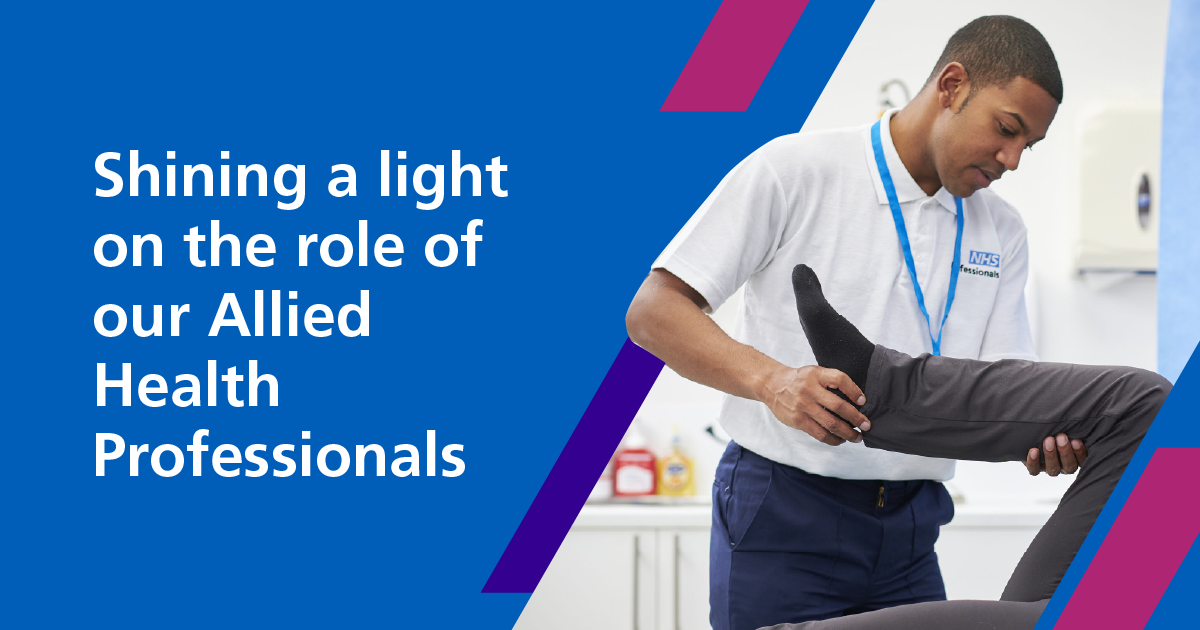
But what is an AHP?
AHP’s are highly skilled and extensively trained practitioners working throughout the UK healthcare system. Their roles are extremely important and are often highly specialised, meaning they can deliver expert and dedicated care to the millions of patients treated each year in hospitals.
There are currently 14 registerable titles for AHPs with 13 of these being regulated by the health professions council.
During 2025, our AHP’s contributed to 1 million hours of dedicated patient care.
With temporary workforce figures of AHP’s being much lower than those of its nursing and midwifery counterparts, it is not hard to see why AHP’s are often unheard of or overlooked by our patients. Understanding and education surrounding this workforce group is limited, leaving many AHP’s feeling undervalued and underappreciated. As a registered AHP I want to show my appreciation for this dynamic and deserving group of workers as well as to address some of the myths and misconceptions attached to AHP’s and their capabilities.
Some common ideas include:
“AHP’s will not be able to progress and develop their careers – MYTH “
NO - AHP’s following agenda for change banding and sit anywhere between Band 2- up to Band 8c, meaning there are plenty of opportunities for AHP’s to undertake senior leadership roles within the NHS.
“AHPS are not registered or regulated healthcare workers – MYTH”
NO - Just like nurses, AHP’s are bound by a professional code of conduct and are registered practitioners with protected titles. Top Tip -Do you know an AHP? -Do you know they too can counter sign passport applications and many other legal documents!!
“AHPS are unable to prepare or administer medication – MYTH”
NO - Lots of AHP roles require competence in preparation and administration of medications, meaning just like registered nurses they will be fully trained to follow Medicines management protocols, and qualified to ensure safe preparation and administration of medications.
“AHPs do not have transferable skills.”
NO - Many AHP’s have been recognised in the NHS for their transferrable skillset which often encompasses care, compassion, safety and quality. This shift is seeing more AHP’s venturing out of their known roles and deployed within other NHS departments, some examples include: Paramedics working within emergency departments, Operating Department Practitioners working within Intensive Care Settings and Occupational Therapists working within mental health units.
The roles that fall within the umbrella term “AHP’s” include:
- Art Therapist
- Music Therapist
- Drama Therapist
- Dietitian
- Occupational Therapist (OT)
- Operating Department Practitioner (ODP)
- Orthoptist
- Paramedic
- Physiotherapist
- Podiatrist
- Prosthetist/Orthotist
- Radiographer
- Speech and Language Therapist
- Osteopath
As a proud AHP I will always support and celebrate this dedicated group of professionals, who day upon day show up to play their part in providing quality and safe patient care. AHP’s are a profound part of the multidisciplinary team, contributing to positive outcomes and improved patient journey. The next time you’re working on shift, look around you, I’m sure there will be a humble AHP not too close by, ask us about our roles, we just love to tell others about our profession, we are proud to be an Allied Health Professional.
Dates for your diary – Help us spread the word, Allied Health Professions Day 14th October 2026.
Written By Operating Department Practitioner Jade Atwell, Clinical Lead for Risk and Improvement at NHS Professionals